
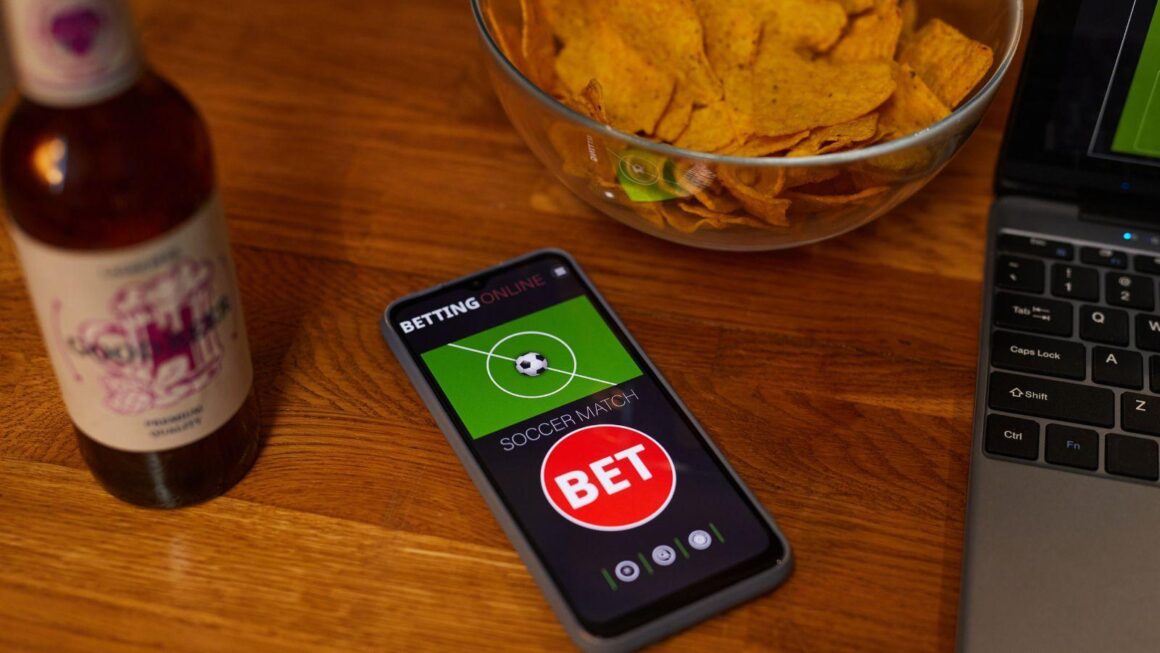
Soccer has always been a data-driven sport, but most of the numbers that are stored and analyzed come from cameras and human observers. The Adidas Trionda, the official ball of the 2026 World Cup, is in itself a source of data recorded in real time during a match. Inside, it contains a motion sensor capable of registering every touch, movement, and change of direction – literally hundreds of data points per second. Although FIFA and Adidas are using the ball as a tool to help referees make faster and more accurate decisions, its impact could go far beyond officiating — for example, into the world of sports betting.
What would happen if the data collected was made available to sportsbooks? Potentially, it could open the door to an entirely new range of betting markets.
What Are Betting Markets?
In industry terminology, a betting market is a specific type of event or outcome on which a sportsbook accepts wagers. The most popular ones include match winner, handicaps (also known as ‘spreads’), and the total number of goals. For the latter market, advanced analytics are already available to bettors; for example, the football stats for betting on Legalbet provide this kind of analysis across different leagues and teams.
There are also ‘micro’ markets. These include the number of cards shown, corner kicks taken, and many other data points recorded by the referee, stats companies, and video tracking systems.
What Makes the Trionda Special?
The Adidas Trionda continues to incorporate Connected Ball technology, which was first used during the 2022 FIFA World Cup in Qatar. Inside the ball is an inertial measurement unit (IMU) with a 500 Hz motion sensor, capable of recording its own movement 500 times per second.
This technology was originally developed to help referees. By precisely detecting the exact moment when a player touches the ball, more accurate decisions can be made in controversial situations, such as offsides and with tackles that lead to penalty kicks being given.
Adidas does not publicly disclose the full range of data collected by the sensors in its new ball. However, the capabilities of modern IMU technology could, in theory, make it possible to obtain information such as:
- The exact moment of contact with the ball.
- Ball speed and acceleration.
- Changes of direction.
- Ball rotation and spin.
- Flight path.
- Position and movement data (when combined with tracking systems).
New Markets That Could Emerge
Let’s try to predict which betting options could emerge from the data collected by the new ball. The following examples are hypothetical, but also potentially feasible from a technical standpoint.
Fastest Shot of the Match
The Trionda makes it possible to create an objective market based on ball speed. This information can be recorded automatically, without the need for human intervention or interpretation.
|
Sensor Metric Used |
Market Examples |
|
Ball Speed |
Most powerful shot of the match |
|
|
Most powerful shot by a player |
|
|
Team that records the most powerful shot |
Longest Ball Flight
Betting sites could measure how long the ball remains in the air. This would introduce an entirely new betting category, focused on the ball’s trajectory – rather than match events.
|
Sensor Metric Used |
Market Examples |
|
Flight Duration, Trajectory Tracking |
Longest aerial pass of the match |
|
|
Over/under maximum flight time |
|
|
Team that produces the longest ball flight |
Most Powerful Goal
Not all goals are scored with the same amount of force. One may come from a soft tap-in, while another may be a shot of more than 100 km/h. Using data from the ball’s sensors, sportsbooks could create all-new goal statistics markets.
|
Sensor Metric Used |
Market Examples |
|
Ball Speed at the Moment of the Goal |
Goal scored with the most power |
|
|
Most powerful goal of the match |
|
|
Player who will score the most powerful goal of the match |
Highest Spin Rate
One of the most interesting possibilities involves betting on the rotation of the ball. These bets would focus not only on the result of a play, but also on the technical execution behind it.
|
Sensor Metric Used |
Market Examples |
|
Ball Rotation and Spin |
Shot with the most spin |
|
|
Free kick with the most curve |
|
|
Player who generates the highest average spin |
Dynamic Ball Markets
Perhaps the most unusual and innovative category would be betting options focused exclusively on the ball. These markets would have no direct equivalent in today’s betting industry.
|
Sensor Metric Used |
Market Examples |
|
Acceleration, Trajectory, Flight Time, Average Speed |
Maximum recorded ball acceleration |
|
|
Highest recorded ball trajectory |
|
|
Longest uninterrupted ball flight |
|
|
Average ball speed during the match |
How Realistic Is This Scenario?
Only a few years ago, these kinds of betting markets would have been seen as science fiction. But technological advances are gradually making them possible… thanks to the data recorded by the Adidas Trionda.
To use the information from the ball, sportsbooks would need access to the official data from FIFA, Adidas, or authorized statistics providers. If these partnerships were to materialize, the betting industry could gain access to entirely new levels of data – enabling them to level up the depth and coverage of their soccer markets.